Nowhere to Be: The Quiet Week That Makes Family Portraits Feel Easy
Photo: George Morland, Public domain, via Wikimedia Commons
By the time the Christmas pudding is a distant memory and the tin of chocolates has been reduced to the ones nobody likes, we are into Twixmas. Those odd, elastic days between Boxing Day and New Year's Eve. The calendar is empty. The fridge is full. Nobody is quite sure what day it is, and that is precisely the point.
For family portraits, this is one of the most underrated windows of the year. Not because everyone is dressed up — they usually are not — but because nobody is performing. Christmas Day has its own choreography: the early start, the presents, the big meal, the group photo that someone insists on before the light goes. Twixmas has no script. That lack of pressure is worth more than any studio backdrop.
The week the calendar goes quiet
Most family schedules are tight. School runs, clubs, work, the weekly shop, the endless logistics of getting four people in the same room at the same time. Between Christmas and New Year, that structure loosens. Relatives are still around. Children are off school. Adults are between deadlines. There is a rare stretch of hours when everyone is in one place and nobody has to be anywhere else.
That matters for photographs because the best family pictures usually happen after the initial awkwardness has burned off. You need twenty minutes of nothing much. Twixmas gives you that. It also gives you low, soft, forgiving light — as long as you know where to find it.
Begin at the window, not with the pose
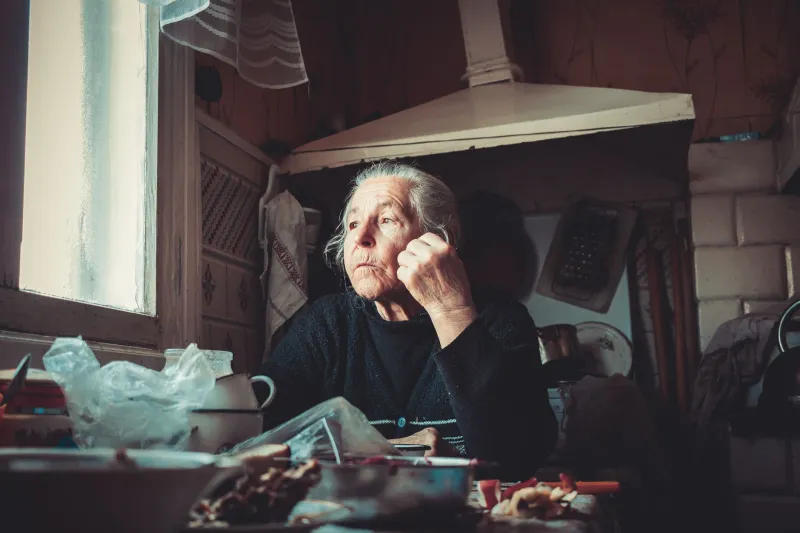
In a UK home in late December, the main light source is usually a window. Not a dramatic studio window, necessarily — a bay front room, a kitchen door, a conservatory, the glass beside the sofa. Start there. Turn off the overhead light. Ask everyone to sit roughly side-on to the glass rather than facing it directly. Then give them something to do.
Make tea. Finish a puzzle. Build the thing that came in the box. Pass the baby around. The point is not to ignore the camera; it is to stop waiting for it. A family sitting in a row, smiling at a lens, is a record. A family crowded around a kitchen table, mid-conversation, is a story. The window does the rest.
If the room feels dark, move closer to the glass rather than reaching for a lamp. In December, a north-facing window gives cool, even light; a south-facing one can be surprisingly bright around midday. Both work. What you want to avoid is a mixture of daylight and yellow ceiling bulbs, which makes skin tones look muddy and rooms feel flat.
Half past three is not a disaster
One of the quiet advantages of Twixmas is that early dusk is not a problem to solve. It is part of the plan. By mid-afternoon in late December, the sky outside a UK window becomes a huge, soft box. The light fades gradually, and for a short window you get something close to a natural studio: gentle highlights, open shadows, no squinting.
Use it. Sit people near the window at around three o'clock and photograph the ordinary stuff — hands around mugs, someone leaning on a doorframe, a child half under the table with a new toy. As the light drops, the room becomes quieter and more intimate. That is when the good frames tend to appear.
Fairy lights belong in the background
Christmas lights can be lovely in a photograph, but not wrapped around someone's face. The trick is distance. Put the tree, the mantelpiece or a string of fairy lights behind your subjects and let them blur into soft points of colour. Expose for the faces, not the lights. Warm bulbs in the background add depth without turning skin orange.
If the lights are too bright or too close, move them. If they are coloured LEDs, keep them well behind the family so they read as atmosphere rather than as a strange glow on a cheek. A single lamp in the corner can do the same job. The window still does the heavy lifting.
A short walk beats a long shoot
Twixmas is also the perfect excuse for a walk that is not really about walking. A loop around the local park, a canal towpath, a high street with shop windows still lit, a National Trust garden that is open for the holidays. Everyone puts on a coat. Someone complains about the cold. The dog comes along. You take photographs while people are moving, which is often when they look most like themselves.
Grey skies are fine. In fact, they are useful. Overcast December light is soft and even, and wet pavements reflect it back. Use shop windows, bus shelters and arches as shelter and as light sources. Do not line everyone up in front of a landmark unless the landmark actually means something to you. Walk, talk, stop when something catches your eye.
How to dodge the Christmas Day line-up
If you want to avoid the forced group-photo feeling, do not announce a group photo. Start with pairs and small groups. Photograph grandparents with a grandchild, siblings on the stairs, one person making coffee while another leans in the doorway. By the time everyone has relaxed, a wider frame can happen naturally — often with someone half out of shot, which is usually better anyway.
Give people a prompt rather than a pose. Tell them to tell each other the worst present they have ever received. Ask who is on washing-up duty. Let the conversation run. The photographs will follow.
The twenty-minute plan
Arrive at half two. Tea. Window light in the front room. At three, a short walk around the block or into the garden. Back inside by half three for the fading light and the fairy lights in the background. Finish by four. No matching outfits required. No extended family line-up unless it is genuinely wanted. Just enough time to make something honest before the kettle goes on again.
If you are planning a family session for the quiet days at the end of December 2026, Twixmas is worth considering. It is not about making Christmas look perfect. It is about catching the week when nobody is rushing — and the light, low and soft, is doing its best work.