After the Speeches, Before the Last Train: Shooting the Office Christmas Party in Available Light

Photo: candid office Christmas party UK pub function room available light photographer, via candidbestpremium.com
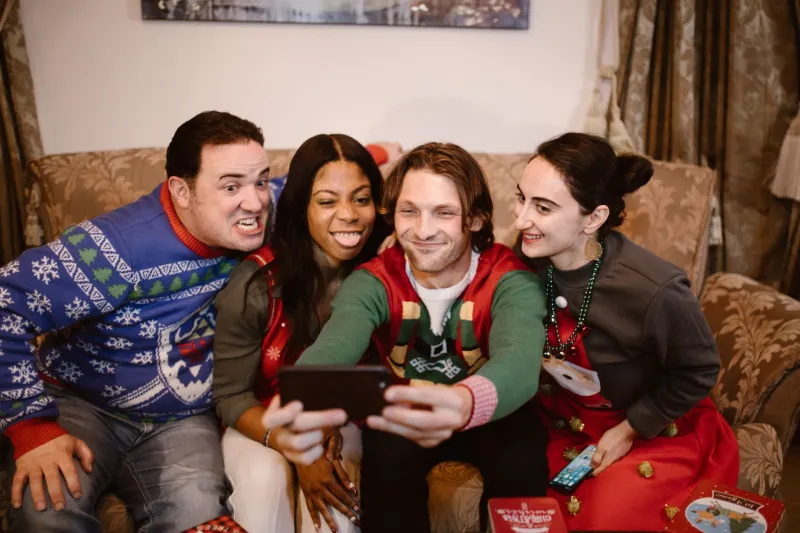
There is a particular sound to an office Christmas party before it properly begins. Coats rustling, glasses landing on tables, someone asking whether the upstairs room is definitely ours. By the time the first speech starts, the room has usually found its own rhythm. The job is not to interrupt it. The job is to photograph it as it actually happens.
That is the brief I keep coming back to for December work dos in 2026: no flashgun formality, no line-ups against a branded backdrop unless somebody specifically asks, no turning a good night into a corporate noticeboard. Available light, a documentary eye and a bit of patience will get you further than a bag of equipment.
Start by reading the room, not the running order
Before anyone arrives, walk the space. A hotel function suite, a pub upstairs, a restaurant side room, a studio with the desks pushed back — they all have their own light. Find the windows. Find the lamps. Find the fairy lights that look charming but will turn skin tones strange if you stand too close. Look for the pools of light where people will naturally gather: the bar, the doorway, the table with the mince pies.
This is also the moment to test your settings. Push the ISO higher than feels comfortable. Check how the room looks at f/2 and f/2.8. Decide whether auto white balance is coping or whether you need to set it manually. If the ceiling is low and pale, you may get a little bounce from the room itself. If it is dark and high, accept that some corners will be moody. That is not a failure. It is the room.
The arrival half-hour is the warm-up
Arrival drinks are underrated. People are still in coats, still finding their people, still being polite. There are hugs, handshakes, the awkward dance of who gets the first round. This is where the story starts, and it is usually easier to photograph than the dance floor because nobody has decided yet what kind of night it is going to be.
Work quietly. A 35mm or 50mm lens is enough. Stay at chest height, move slowly and wait for the second look rather than the first. The first look is often the performance; the second is the person. Photograph the table of Secret Santa presents, the colleague who has clearly been put in charge of the playlist, the quiet conversation by the window. These are the frames that will still make sense in January.
Speeches need reactions more than spotlights
Speeches are the part of the evening most likely to tempt a photographer into direct flash. Resist it. A burst of white light in a dim room does not just flatten the speaker; it reminds everyone that they are being photographed. Instead, expose for the faces and let the projector screen or the fairy lights do what they will. If the screen blows out, so be it. The expression matters more than the slide.
Move around the edge of the room. Photograph the listeners: the laugh that arrives a beat late, the person nodding, the colleague checking their phone under the table. Those are the photographs that tell the room what the speech was like. If you can use a silent shutter, do. If you cannot, pick your moments and do not machine-gun the whole thing.
Mixed winter lighting is part of the atmosphere
December rooms are never colour-neutral. You will have tungsten bulbs, LED downlights, candles, fairy lights, phone screens and perhaps a disco light that somebody swore would be subtle. Trying to correct every one of those to a perfect neutral white is a quick way to make the pictures look sterile.
Keep the warmth. Let the corners go amber. Let the dance floor go a little wild. What matters is that faces remain readable and the mood stays intact. Edit in small groups by lighting zone rather than applying one global correction to the whole night. A photograph taken by the window at 7pm should not look exactly like one taken under a red uplighter at 11pm. The difference is the story.
The dance floor nobody expected to be photographed
The dance floor is where the office Christmas party stops being an office Christmas party. It is also where photographers often get it wrong by trying to make it look tidy. It will not be tidy. Use a wide lens, get low, embrace a little motion blur and let the room be dark around the edges. A sharp face in a soft, moving crowd is often better than a perfectly frozen scene that looks like a rehearsal.
Do not use flash to freeze the action. Wait for the moments between the moves: the group huddle, the person being pulled up from a chair, the jacket discarded on a radiator. If somebody clearly does not want to be photographed, let them be. A good event gallery is built on trust, not coverage at all costs.
Blend in, then deliver the night back
Dress like a guest rather than a press photographer. Keep the kit simple. Introduce yourself to the organiser, then disappear into the room. Do not post anything on the night unless you have been asked to. Deliver a small preview of ten or fifteen frames the next morning if the client wants it, then edit the full gallery with warmth and consistency. Keep the quiet frames in. They are often the ones people remember.
The best office Christmas party photographs do not look like they were taken at an event. They look like the night itself — slightly messy, warmly lit, full of people who forgot for a few hours that they share a calendar. That is the room worth photographing in 2026.