The Aisle Is Dark and the Baby Is Due a Nap: A Natural-Light Christening Playbook

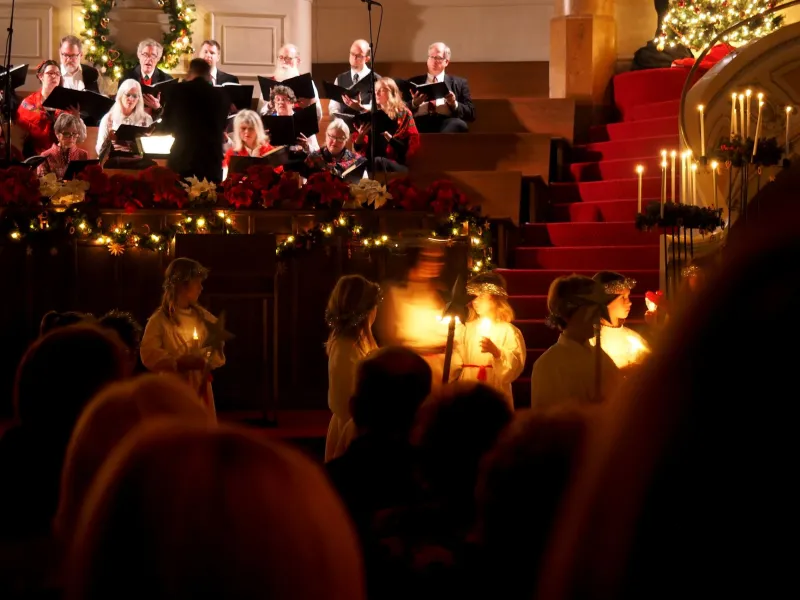
Photo: natural light christening ceremony in a UK stone church, baby at font with family and godparents, documentary style, no flash, via asset-2.tstatic.net
Christenings have a habit of looking simple on paper. A baby, some water, a few promises, a bit of a hymn. Then you arrive at a stone church on a grey November morning, the aisle is the colour of a closed curtain, the toddler has spotted the candle stand, and the godparents have arranged themselves into a tight row of nervous smiles. Flash is not the answer. Patience, a decent window and a plan you can abandon quietly are.
This is the approach I take for a UK christening or naming ceremony when the brief is natural light and as little disruption as possible. It is not a rigid shot list. It is a way of working that keeps the service at the centre and the photographs close behind.
Start with the vicar, not the camera
Before I think about lenses, I ask whoever is leading the service what they are happy with. Some clergy are relaxed about movement near the font. Others prefer you stay in one spot and work around them. Both are workable. What is not workable is guessing.
I usually ask three things: where I can stand, whether I can move during the hymns, and whether there is a moment they would rather I did not photograph. Most are glad to be asked. It also gives you a chance to mention that you will not be using flash and that you will not be stepping into the middle of the prayers. It sounds obvious, but a two-minute conversation before the guests arrive buys you a lot of goodwill for the next hour.
If there is a rehearsal or a quiet ten minutes before the service, use it. Walk the aisle. Find the windows. Work out where the light actually lands at eleven o'clock in the morning in early spring, not where you assume it will.
The window is the lead photographer
Old churches are not built for cameras. They are built for shade, stone and the occasional shaft of light that lands exactly where nobody is standing. The trick is to treat the windows as your key light and everything else as a supporting act.
A north-facing window gives you soft, even light that flatters faces and copes with dark woodwork. A south window can be glorious but harsh, especially in summer. If the family is gathered near the font, I will often position myself so the window is to their side rather than behind them. Side light gives shape. Backlight gives atmosphere, but it also gives you a lot of silhouettes if you are not careful.
Where the light is genuinely poor, I do not fight it with a flash. I raise the ISO, open the aperture and accept that a little grain is part of the honest look. A photograph with texture and real expressions beats a bright, flat frame every time.
Where to stand, and when to move
During the service itself, I stay put more than people expect. The best frames often come from one good position: slightly to the side, with a clear view of the font, the parents' faces and the godparents' hands. Hands matter at a christening. So do the small glances between people.
I move during the hymns, the readings and the walk to the font. Those are the natural gaps where a few steps will not pull focus. During the promises, I stay still. That is the part people remember, and it is also the part where a wandering photographer becomes the story instead of the service.
The other useful position is the back of the church. Not because it is hidden, but because it gives you the whole scene: the family at the front, the congregation behind, the light falling down the aisle. One wide frame from the back can carry an entire gallery.
The group shots that actually matter
I keep the formal list short. Very short. The photographs people come back to are usually the ones with the baby, the parents, the godparents and the grandparents. Everything else can be caught candidly over tea.
We do the essential group shots straight after the service, near the best window or just outside the door if the weather is behaving. I ask people to gather in loose rows rather than a stiff line, and I take the safe frame first, then the slightly more relaxed one. Godparents holding the baby, grandparents leaning in, a hand on a shoulder. Those small adjustments do more than any amount of posing.
If there is a large family group, I will do it in one go and then let people disperse. Nobody wants to be held in place while cousins are hunted down from the car park. The rule is simple: gather once, shoot quickly, thank everyone and let them go.
Toddlers, godparents and the fidget factor
A christening is a long sit for a small person. I plan for that. I look for the moments before the wriggling starts: a child peering over the pew, a godmother bouncing a baby on her hip, a grandad making faces from the second row. Those are the frames that feel like the family you actually know.
When a toddler does kick off, I do not try to choreograph it. I photograph the parent carrying them down the aisle, the whispered negotiation by the font, the brief escape towards the hymn books. They are part of the day. A gallery that only shows calm, composed faces is not telling the truth about a family with a two-year-old in it.
For the group shots, I keep instructions light. 'Stand roughly here and look at the baby' works better than a detailed arrangement of shoulders and chins. The less people have to think about the camera, the more they look like themselves.
Dark aisles and grey mornings
British weather is not always on your side. A wet Sunday can turn a church into a cave. In those conditions I lean on the brightest available patch of floor, usually near the door or a side chapel, and I use it for the portraits after the service. The service itself I shoot as it is: high ISO, steady hands, and a willingness to wait for the moment rather than force it.
If the church has a porch, use it. Porches are underrated. They give you shelter, a soft wash of daylight and a natural frame for families arriving and leaving. Some of my favourite christening photographs have been taken in a porch while the rain came down behind everyone.
The bits nobody photographs but should
The register signing. The baby being handed from one godparent to another. The grandmother adjusting a coat. The vicar's hand on the font. The tea urn in the church hall. These are the quiet, ordinary frames that hold a gallery together.
I always stay for the hall if there is one. Not for the cake, though I am not above it. I stay because that is where the day relaxes. People take their coats off, the baby gets passed around, and the photographs start to feel like a family rather than a ceremony.
A christening does not need a heavy production. It needs someone who knows where the light falls, when to move, when to stay put and how to let the day be itself. The font, the window and the fidgeting godparents will do the rest.