Half-Light and Hymns: A Flash-Free Plan for the Village Carol Service
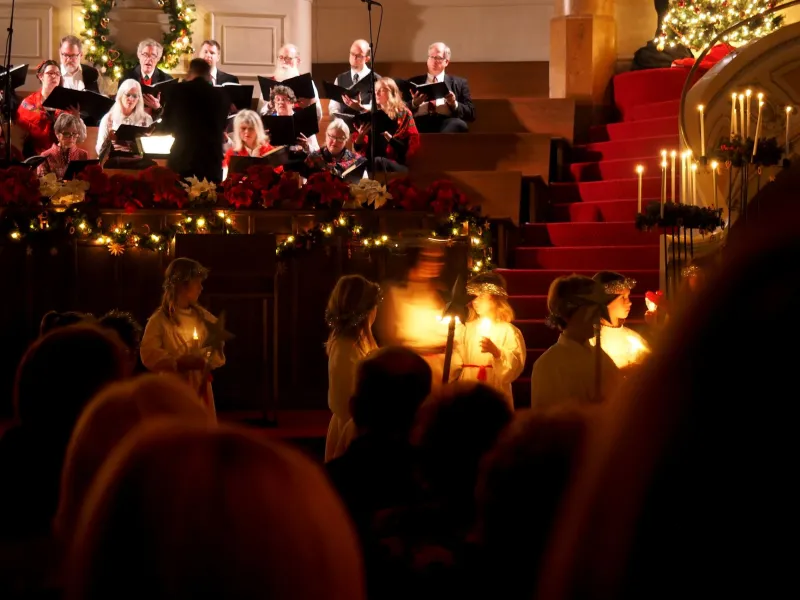
There are events where the lighting is the story. A village carol service is one of them. By the time the first verse of 'Once in Royal David's City' gets going, the nave is usually a mix of candle flame, a few tired overhead bulbs and whatever light leaks through the porch door. It is atmospheric, uneven and absolutely not designed for a camera. That is exactly why it works.
Scout in daylight, shoot in half-light
Arrive early enough to see the room before the candles take over. In December that might mean 3.30pm or 4pm, when the church is still grey and ordinary. Walk the aisle. Ask the vicar or churchwarden where the candles will be lit, where readers stand, where the choir sits and whether the porch door will be open. Check the overhead switches too. A single bulb above the lectern can be your friend; a full bank of fluorescents can kill the whole atmosphere. If you can politely ask for one bank to stay off, do. If not, work with what is there.
The kit is simple, the settings are not
I take two fast primes, usually a 35mm and an 85mm, and sometimes a 50mm if the church is small. A mirrorless body with a silent shutter is ideal. Flash stays in the bag. The point is not to light the service; it is to photograph the light that is already doing the work. Start at ISO 3200, f/2, and 1/60 sec for singing and candlelight. Push to ISO 6400 if you must. For readers, aim for 1/125 sec so hands and hymn sheets stay sharp. Meter for faces, not flames. Candle flames are meant to blow out; faces are not. Shoot raw and sort the colour later.
Where to stand without becoming part of the service
The back of the nave gives you the wide shot: pews, hats, candlelight, the tree at the front. The side aisle gives you readers in profile and choir without blocking anyone's view. The porch doorway is gold for arrivals, latecomers and the spill of light as people come in from the cold. Pick three or four spots and move between items, not during prayers. If you are in a pew, stay there for the carol and move after the last verse. Nobody minds a photographer who is still. They notice one who is restless.
The bit where everyone goes quiet
Every carol service has a moment when the chatter stops. It might be the lighting of the Christingle candles, a child starting a solo, or the second before the final verse. That is the frame. Do not fill it with direction. Shoot wide to show the whole room holding its breath, then close on one face lit from below. Wait. The quiet is short, but it is generous. If you miss it, do not ask for a repeat. A repeated moment is a performance, and the photograph will show it.
Readers, choir and families
Readers are easiest just before they start, when they are looking down at the sheet and the reading light catches their face. Shoot the hands too: thumb on the page, paper curled from the cold. The choir is best from the side, halfway back, where you can catch breath in the air and candlelight on the music. Families need the least staging. Catch them in the porch afterwards, still in coats, children holding half a mince pie. Do not hold up the mulled wine queue. One or two frames, then let them go.
Protect the mood
Agree the boundaries before the service: no flash, no wandering during readings, no asking people to look at the camera. Dress dark and quiet. If you need to use a torch to focus, keep it dim and brief. Thank the organist, the churchwarden and the person who lent you a candle. The photographs should feel like the service, not like a photo call that happened to take place in a church.
A short plan for the night
Scout at 4pm. Set ISO 3200, f/2, 1/60 sec. Wide from the back for the first carol. Side aisle for the first reading. Porch for latecomers. Back to the side for the choir. Stay still for the quiet moment. Porch again for families. Leave when the last hymn starts, or stay for the tea and mince pies if that is where the story is. Then go home, back up the cards and keep the warmth in the edit.