Coffee First, Cobbles Second: The Case for a Day-Two Wedding Portrait Walk
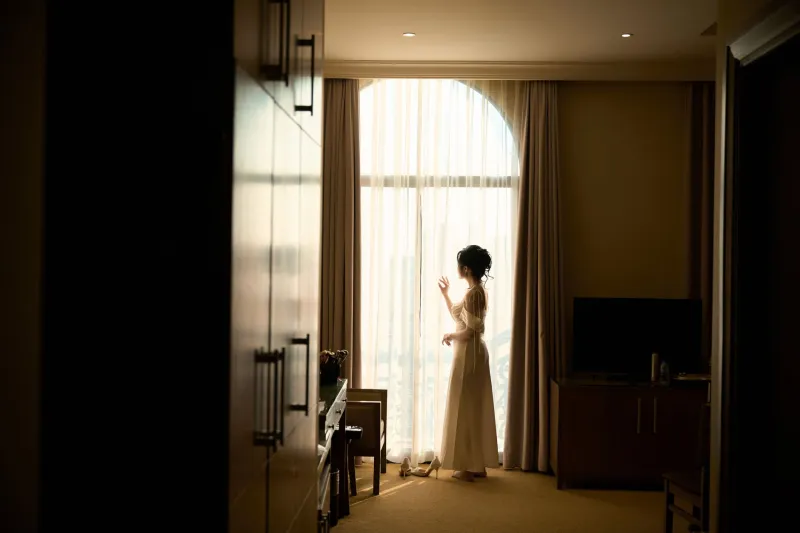
There is a particular sort of quiet that settles over a wedding venue the morning after. The chairs have gone back to wherever chairs live. The dance floor has been swept. Someone is quietly polishing glasses behind the bar, and the couple are upstairs trying to work out whether the hairdryer belongs to them or the bridesmaid. It is not glamorous. It is, however, one of the best times all weekend to make photographs.
I know the wedding day is the headline event. It has the dress, the speeches, the first dance and the aunt who requests the song everyone secretly wants. But it also has a schedule. The day after has none of that. The couple are tired in the honest way, not the performed way. They have had breakfast. They are wearing something soft. They are not being watched by ninety people with phones. That changes everything in front of a camera.
Breakfast first, camera second
The most useful thing you can do for a day-two portrait walk is protect breakfast. Not the idea of breakfast. The actual plate. A couple who have had coffee, toast and ten minutes to sit down will always photograph better than a couple who have been rushed out before the kettle has boiled.
Timing depends on check-out, but a useful window is usually between 9am and 11am. If check-out is at 10am, ask the venue whether you can keep the room or leave bags while you step outside. Many UK venues are far more relaxed about this than couples expect, especially on a Sunday or a weekday morning. If check-out is strict, start at 8.45am, walk for forty minutes and be back for the bags. A short session done calmly beats a long one done in a panic.
I tend to suggest meeting after breakfast rather than before. People need a moment to arrive in the day. Let them finish the coffee. Let them find the missing shoe. The photographs will wait.
A walk, not a shoot
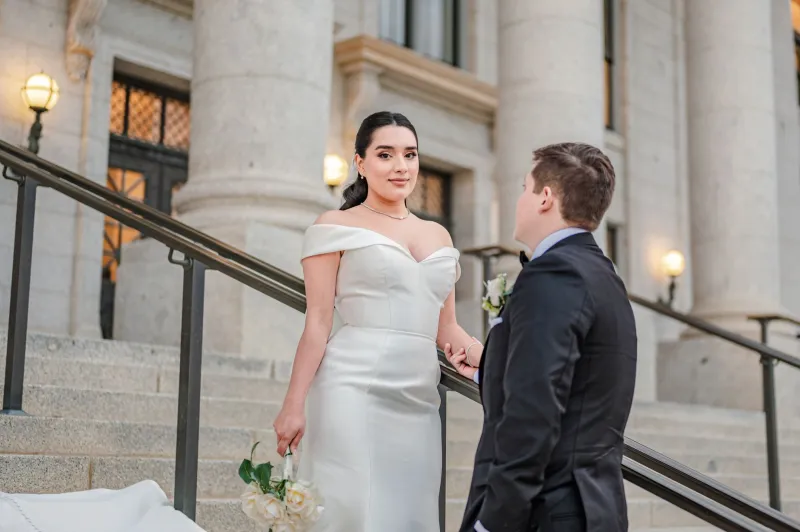
The best day-two sessions are not really sessions. They are walks with a camera nearby. The route should start at the venue door and stay short — five minutes out, five minutes back, with a few good pauses in between. A churchyard, a leafy lane, a park bench, a high street with a decent bakery, the edge of a market square: all of these work because they give the couple something to do other than look at me.
I look for ordinary light. A shopfront throwing soft bounce across the pavement. A wall that has been warmed by the morning sun. A covered walkway that turns grey drizzle into something gentle. In November or early spring, that might mean working quickly in a small patch of brightness and then moving on. In summer, it might mean using the shade of a big tree before the sun gets too high and hard.
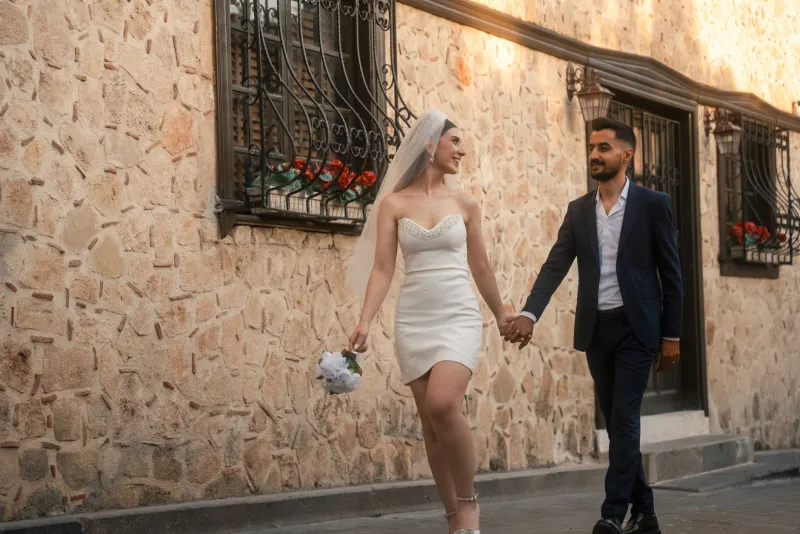
This is also when the body language changes. On the wedding day, couples are often holding a pose without realising it. The day after, they hold a takeaway cup. They point at a dog. They walk arm in arm because it is cold, not because I asked. Those are the frames that make a gallery feel like a real weekend rather than a sequence of set pieces.
When the weather has other ideas
A UK day-after walk needs a plan B, and sometimes a plan C. Before the morning, I check three things: the radar, the wind and whether the venue has a porch. A covered market, an arcade, a railway station with a good clock, a hotel corridor with nice windows or a pub that opens early can all save the session. I always ask permission before photographing inside a business. It is a small courtesy that usually gets a warmer welcome than people expect.
Umbrellas are not a failure. A couple under one umbrella on a wet cobbled street is a better photograph than a couple squinting into forced sunshine. If the rain is proper rain, we shorten the walk. Ten minutes outside and twenty minutes in a dry, well-lit space is plenty. The story still works. The gallery does not need every frame to be an epic landscape.
What to wear when the good clothes have gone home
The wedding outfit has had its moment. The day after is for layers, comfortable shoes and whatever makes the couple feel like themselves. I usually suggest a simple palette — denim, wool, linen, navy, cream, a favourite jumper — rather than anything too matching. Matching outfits can look like a themed shoot. Comfortable ones look like a couple.
If they want a nod to the day before, one small element is enough: the wedding jacket over a T-shirt, the veil carried rather than worn, a pair of earrings, the same shoes if they are genuinely comfortable. The bouquet may be tired by then, so don’t rely on it. A coat and a decent umbrella will do more for the photographs than a wilting rose.
The frames that finish the story
A wedding gallery usually ends with the last dance or the car pulling away. That is a fine ending, but it is not the only one. A day-two walk gives the gallery a quieter final chapter: the couple walking back to the venue with coffee, the lane they almost missed, the joke about the breakfast bill, the moment they stop performing because there is no audience left.
These photographs do not replace the wedding day. They complete it. They say: here is the celebration, and here is the morning after, when it was just the two of you and the ordinary light.