The Frames Between the Fanfare: Seven Quiet Moments That Tell the Real Event Story
Every celebration has a timetable. The ceremony, the speeches, the cake, the first dance, the confetti shot. Those moments matter, and I photograph them properly. But after years of covering weddings, christenings and milestone parties across the UK, I have come to believe that the scheduled highlights are rarely the whole story. The real story lives in the gaps between them — in arrivals, in hands, in waiting, in exits. Those are the frames that make people pause when they open the gallery.
1. Arrivals before the performance
Guests arriving at a church porch or a village hall are not yet performing. They are looking for parking, carrying bags, checking their phone, adjusting a tie, hugging someone they have not seen since last Christmas. A mother arrives with a bin bag of shoes. A grandfather waits by the gate. A child runs ahead in unsuitable shoes. These are the first honest frames of the day.
Natural light is your friend here. Stand back in the porch or under a tree. Use the open doorway as a soft box. Do not direct anyone. Just watch and wait.
2. Hands
Hands tell the story while faces are busy being polite. A hand gripping an order of service. A grandmother's hand resting on a grandchild's shoulder. Two hands passing a baby at a christening. A hand holding a pint at a milestone birthday. At a wedding, look beyond the rings for a moment. Look at the way a couple clasp hands during the vows, or the way a father lets go just before the aisle.
Look down. It is one of the most useful habits in event photography.
3. Waiting
Waiting is where nerves show. The ten minutes before a ceremony are full of small, telling details: a groom checking his watch, bridesmaids crowded in a hallway, a child sitting under a table with a biscuit. At a christening, it is the quiet hush before the font. At a milestone party, it is the aunt in the kitchen, the cousin on the stairs, the host doing one last sweep of the room.
Do not fill the silence. Let it happen. Use available window light and keep your movements small.
4. The in-between glance
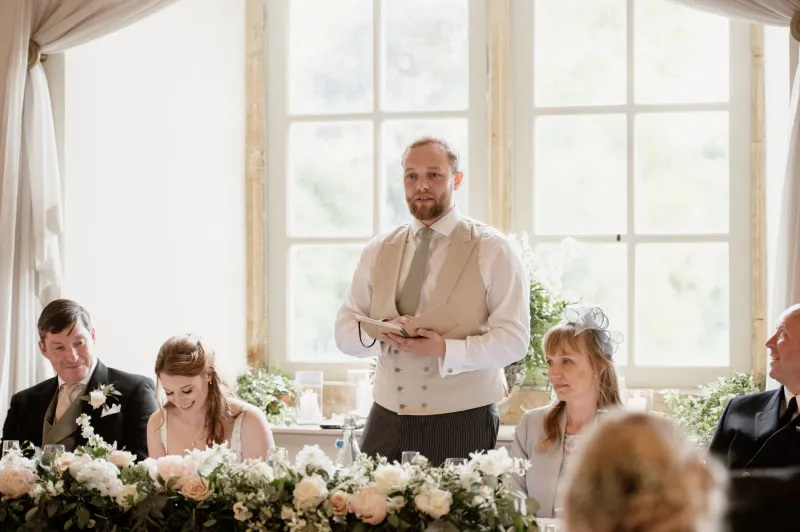
During a speech, most cameras point at the speaker. The better picture is often across the room: a couple exchanging a look, a parent watching a child dance, a friend laughing before the punchline lands. These are the images people cry over later.
Anticipate them by watching faces, not just the action. Position yourself near a window or an open door. Stay patient. A glance lasts half a second, but it is enough.
5. Exits and departures
The exit is often more honest than the entrance. The confetti has settled, the couple walk to the car, guests drift towards the bar. At a christening, the family walk to the pub. At a party, the last few guests stand in the doorway saying goodbye. This is where the day exhales.
Late afternoon light can be beautiful here. Wait for the hug, the hand on the back, the child asleep on a coat. Do not rush off to edit.
6. The kids' table, or the floor
Children do not follow the schedule. They disappear under tables, run down corridors, sit on stairs, fall asleep in odd places. These frames show the real texture of an event: the wellies by the door, the toddler with icing on their face, the older children running laps of the garden.
Crouch low. Keep your voice down. Available light is usually enough. A silent shutter helps if you have one, but patience helps more.
7. The tidy-up
At the end of the night, chairs are stacked, borrowed plates are boxed, someone is sweeping the hall, the bride is barefoot with shoes in her hand. It is not glamorous. It is true. The tidy-up is the exhale of the whole day, and it often produces the most quietly affecting photographs.
How to anticipate without staging
Watch, do not direct. Learn the timetable, then ignore it between the highlights. Use natural light wherever you can: doorways, windows, overcast skies, the shaded side of a marquee. Position yourself early. Keep one eye on the edges of the room. Do not chase every moment. The quiet ones reward patience.
Build a little trust with a few words, then step back. Dress to blend in. Put your phone away. The less you look like a photographer, the more people forget you are there, and the more real the pictures become.
Confetti is great. Cake is great. But the frame you will end up framing might be a hand on a shoulder, a child asleep on a coat, or a father waiting by the door. Those are the moments between the fanfare. They are the ones that tell the real story.