Shelves, Rain and the Long Saturday: Family Portraits in a Borrowed Bookshop
Photo: Guido Reni, CC0, via Wikimedia Commons
By mid-November, a wet Saturday in the UK has a particular texture. The window goes grey at 3pm, someone's coat is dripping by the door, and the idea of a windswept family shoot in the park loses its charm. That's the moment I start thinking about shelves.
Not because a library is a fallback. Because a library or a good independent bookshop is one of the few indoor places that already belongs to family life. It smells of paper and radiators. It has window light, deep aisles, and things to do with your hands. For a certain kind of family, it makes more sense than a studio.
Here's how I approach it.
Why the library beats a blank wall
A studio gives you control. A library gives you context. The room is already full of stories, and most families relax faster in a place where they can browse, sit down, and whisper about a book cover. Children who would freeze in front of a seamless backdrop will happily disappear into a children's corner. Parents who hate being posed will lean against a shelf and look like themselves.
The light helps. Older libraries and bookshops often have tall windows and pale walls, which means soft, directional daylight without any equipment. You are not fighting a ceiling of fluorescent panels. You are borrowing the best window in town.
Ask first, then ask again
Permission is the whole game. Phone the library or bookshop in advance, explain that it is a small family portrait session, no flash, no lights, no rearranging. Ask for the quietest hour. Avoid story time, rhyme time, and the Saturday craft table if you can. In a library, ask whether a photography policy already exists; many do. In a bookshop, ask the manager, not just the person on the till. Offer to buy a book afterwards. It is not a fee, just good manners.
On the day, check in again. Staff may have said yes three weeks ago, but the room is different when it is raining and every table is taken. If it feels too busy, shoot for ten minutes and leave. The photographs will be better for it.
Work the window, not the room
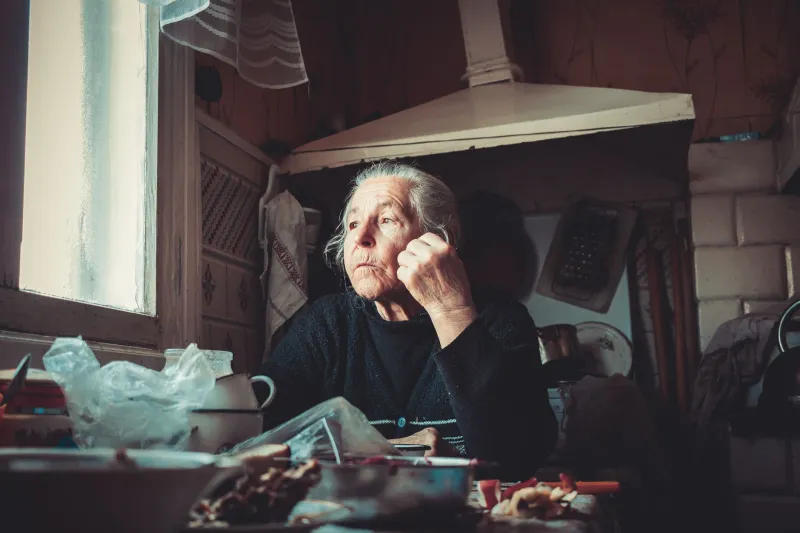
Natural light is the reason to be here. Find the biggest window, usually at the front or in a children's corner, and place the family so the light falls across faces rather than behind them. Side light is kind. A parent by the window with a child on their knee, both angled slightly towards the glass, gives soft modelling and catchlights without a single modifier.
Don't fight the shelves. Let the far end of the room go dark. Expose for the faces and the background can fall into warm shadow. That is what makes the pictures feel like a room rather than a set. If the window is bright and the room is dim, move people closer to the glass rather than reaching for flash. Bounce nothing, add nothing, just wait for your eyes to adjust.
Shelves are for depth, not clutter
Shelves are not a backdrop; they are architecture. Use an aisle like a corridor: family at one end, camera at the other, rows of spines leading the eye. Shoot along the shelf rather than square-on and you get depth for free. A child peering between books, a parent reaching for a title, a grandparent reading the first page — these are portraits with a built-in frame.
Keep it tidy, though. A cluttered background of twenty colourful covers will fight a face. Look for a run of muted spines, a plain wall at the end of the aisle, or a window seat. And never move the books to make a shot. Part of the point is that the place looks like itself.
Give them a book, not a pose
Poses go stiff in libraries. Books don't. Ask each person to choose a book they would actually take home. Give them two minutes to browse. Photograph the choosing, the showing, the reading. A child who is told to sit still will fidget; a child who is told to find the silliest book in the room will forget you are there.
For a family group, try a shared book. Everyone leaning in, one person holding, someone turning the page. It gives hands something to do and eyes somewhere to go. If the children are shy, start with them alone in the children's corner and let the adults drift back in. The best frame is often the one where someone is mid-laugh at a picture, not looking at me.
The quiet rules that keep everyone welcome
Libraries are not studios and bookshops are not private venues. Use silent shutter if you have it, keep your voice low, and don't block aisles. If other readers are in frame, wait or reframe. Don't photograph strangers' children. Keep the session short — twenty minutes is plenty in a small space — and leave the room as you found it. In a bookshop, a round of teas from the cafe and a book bought at the till go a long way.
What to wear, what to bring
Solid colours work better than busy prints against busy shelves. Jumpers, not slogans. Bring a hairbrush, a cloth for wet coats, and maybe a favourite book from home for a child who needs an anchor. Wellington boots can stay by the door. If the library has a no-food rule, leave the biscuits in the car.
The ten-minute plan
Window seat first: one parent, one child, side light. Then aisle depth: the whole family walking towards camera, then stopped, then reading. Then the choosing-a-book candid. Then a tight frame of hands and a cover. Then a wide frame from the far end to show where you were. That is five setups, ten minutes, and a gallery that feels like an afternoon rather than a photoshoot.
Rainy Saturdays are not a problem to solve. They are a reason to go somewhere with a story already in it. A library or bookshop gives families something to do, something to hold, and a window that does most of the lighting work. If you have been putting off portraits because the weather is grim, borrow a shelf and see what happens.