Less 'Big Smile', More Biscuit: A Language Tune-Up for Family Portrait Days
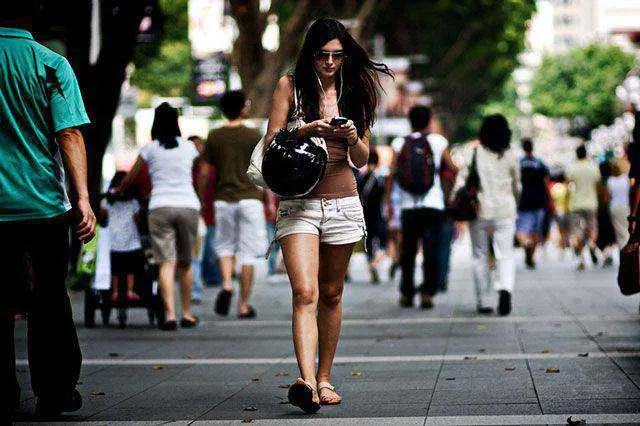
Photo: candid family laughing together in bright kitchen at home natural window light UK, via speckyboy.com
There's a moment, somewhere around the fourth frame of a family session, when every photographer in Britain says the same thing. Mine used to be "just one more". I'd say it three times. The children knew precisely what it meant, and so, unfortunately, did their parents.
Over the last few years I've been quietly striking phrases out of my working vocabulary, and the sessions have improved for it. This isn't a scolding. I've said all of these cheerfully to perfectly nice people in perfectly nice kitchens. But in natural-light portraiture there's no softbox to hide behind — the language is the kit. It's the only thing steering the room.
Here's what has come off my list, and what has gone in its place.
"Just one more"
Children are forensic about this one. They hear it as proof the end is negotiable, and it teaches them the whole session is something to be endured rather than enjoyed. Worse, it puts me in the position of a person who says a thing and then doesn't mean it, which is a terrible look in front of a seven-year-old.
The swap: be honest and specific. "Two more, then we're finished and you can show me the trampoline." Then honour it, absolutely. If the light does something extraordinary and I genuinely want another thirty seconds, I ask for it as a favour — "I know I said we were done, and I'd love one more because that sky is doing something silly" — which works far more often than the small lie.
"Look at me"
Asking a child to make eye contact with a stranger holding a black box is a big ask, and it nearly always produces the church-mouse face: chin down, eyes up, shoulders round the ears. Actually better than a forced grin, but still not a photograph of them.
The swap: give the eyes a job. "Can you check whether your brother's shoelace is undone?" "Is my lens cap on my shoulder or on the floor?" Eyes come to the right place on their own, and the body stays relaxed because the instruction was a task rather than a demand.
"Big smile" and the cheese embargo
"Say cheese" is a facial exercise, not an emotion. You can watch a child assemble a smile from parts. They know it's fake, you know it's fake, and the resulting frame has the specific tension of a passport photo taken under duress.
The swap: provoke the real thing. Ask what happened at school this week that was deeply unfair. Ask who farted at teatime. Ask them to say something rude but silent. Ask them to tell their mum the worst thing about school dinners, in a whisper. The laugh arrives a beat after the question and you have to be ready for it — which is why I now shoot in short bursts and keep my mouth shut.
"Don't worry, it'll be quick"
Well-meant, and it frames the next forty minutes as a medical appointment. I'd rather name the shape of the session out loud: "We'll do the boring standing-up bit first while the light's good, then the garden, then biscuits." Structure reassures adults far more than speed does, and it gives children something to look forward to that isn't the front door.
"Stand still" and "sit nicely"
Stillness imposed from outside looks like a hostage situation. Stillness that comes from concentration looks like a family.
The swap: give a place and a physical job. Feet on the paving slab by the back door. Hands full — a mug, a football, a fistful of the dog's ear. Stand there and hold this, look at that, wait for the kettle. Contained movement is what you want; it photographs beautifully.
"Just relax"
The least relaxing sentence in the English language. Nobody has ever relaxed on instruction, and the follow-up — "you look great, honestly" — rarely lands either, because it sounds like what it is: reassurance from a professional.
The swap: give them something to do together. Walk to the gate and back. Make a cup of tea and hand it to your mum. Sit on the step and argue about the holiday. Twenty seconds of a real activity beats twenty minutes of coaxing.
The parents' version
One of the quietest improvements I've made is asking parents not to join in the directing. "Smile properly, Ella" from mum in the doorway does far more damage than anything I could say, because it carries a small note of disappointment that a child will sniff out instantly.
So I say, gently and early: "You're not on duty for the next hour. Talk to each other, not to me, and if they go a bit daft, that's my problem." Nine times out of ten the parents relax first, and the children follow about ninety seconds later. That's not a coincidence.
What I actually say now
Short list, in roughly the order it gets used: "Tell her about the frog." "Hold that." "Walk towards me." "Look at the back door." "Do it again, but slower." "What did he do then?" And, often, nothing at all — because a camera held up in silence for long enough becomes a piece of furniture, and people stop performing for it.
The measure of a good session isn't the number of frames where everyone is grinning at the lens. It's how many frames look like the people in them. If I have to sound slightly ridiculous in a Stockport kitchen to get there, that's the job.