No Crowd, No Rush: Why a Cold January Park Makes Better Portraits
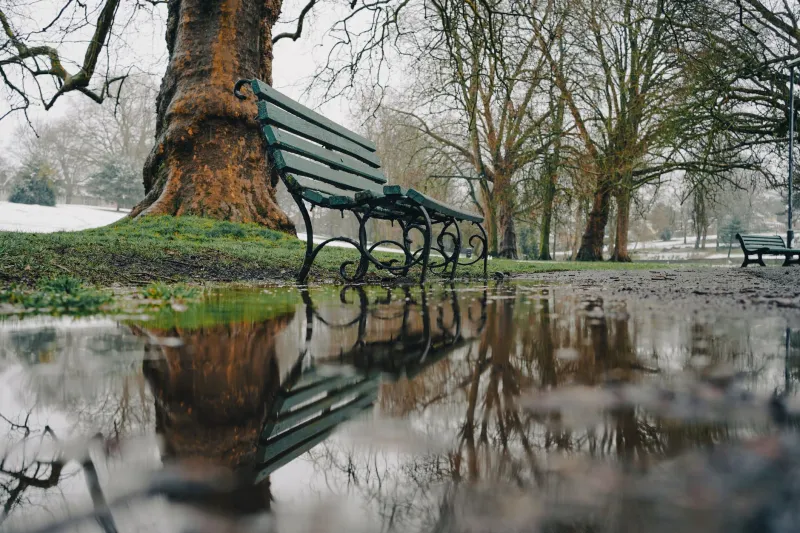
There is a particular kind of quiet in a UK park in January. The swings are still. The café has half its chairs stacked. The path is wet enough to shine but not busy enough to matter. For most people, that reads as a reason to stay indoors until March. For a portrait session, it is the whole point.
I am writing this in mid-November, with January dates already in the diary, and I know the usual objection: it will be cold, it will be grey, and nobody feels photogenic in a coat. Fair enough. But the photographs that people actually frame tend to come from sessions where nobody was watching, nobody was rushing, and the light was doing something soft and undramatic. January hands you all three.
The Quiet Month Has a Practical Advantage
A park in October is a lovely place and a terrible studio. There are leaf-kickers, dog walkers, birthday parties and at least one person who wants to tell you about their camera. None of that is a disaster, but it changes how people behave. Adults straighten up. Children perform. Couples start doing the stiff promenade walk they think photographers want.
In January, the audience disappears. The result is not just fewer photobombers. It is a different atmosphere altogether. People talk more naturally, move more slowly and forget the camera is there. If you have ever looked at a photograph of yourself and thought, I look like I am waiting for instructions, this is the fix.
Low Sun, Pale Sky, Bare Trees
The light is the other reason. In January the sun stays low all day, which means it behaves less like a spotlight and more like a lamp left on in the next room. On a clear day you get long shadows and a warm edge to everything. On an overcast day the pale sky becomes a giant softbox, which is a flattering thing to stand under.
Bare trees help too. In summer, foliage is beautiful but busy. In winter, branches give you structure without clutter. A line of trees becomes a frame. A hedge becomes a windbreak. A wet path gives you a reflection and a leading line in one go.
And the cold? It gives people somewhere to put their hands. Couples stand closer. Families huddle. Children burrow into coats. Those small, unconscious gestures are usually the best frames of the day.
Work With the Short Daylight Window
January daylight in the UK is short, so the session has to be planned rather than improvised. I usually aim for a start between 10:30am and 1pm. That is when the light is at its most workable and the air is at its least punishing. Late afternoon is possible, but it goes from soft to flat very quickly, and nobody wants to be standing in a freezing park at 4pm pretending to enjoy themselves.
If the forecast is bright and clear, I look for open shade or backlight so nobody is squinting. If it is flat and grey, we can shoot almost anywhere. The only real enemy is horizontal rain, and even then a covered bandstand, a colonnade or a shopfront can save the day.
What to Wear When It Is Cold but You Still Want to Look Like You
The goal is not to dress for a summer portrait and shiver through it. The goal is to look like a winter version of yourself. That means layers with texture: a wool coat, a chunky knit, a scarf with a bit of colour, boots that can handle a wet path. Avoid anything that rustles like a crisp packet or makes you walk like a spaceman. You want to be able to move.
For families, coordinate loosely rather than match exactly. Two or three colours across the group is enough. For couples, bring a second scarf or a lighter jacket if you want variety without changing your whole outfit in a car park. For creative clients, bring the thing that feels like your work — a notebook, a camera, a tool, a piece of fabric — and we can build a few frames around it.
A Simple 45-Minute Session Plan
Here is how I run a January session when we are working with cold hands and a short window.
0–5 minutes: walk and talk. No camera. We meet at the park gate, walk towards the first bit of open space and chat about anything except photographs. This is not filler. It is how people stop feeling like they have arrived at an appointment.
5–15 minutes: movement. Walking shots along a path, a couple holding hands, a family heading somewhere. Movement warms everyone up and gives me honest expressions before anyone has started posing.
15–25 minutes: structure. We use the bare trees, a wall, a bandstand or a hedge to create a bit of shape. This is where the group portraits happen, but I keep them loose. Nobody stands in a line unless there is a good reason.
25–35 minutes: close and quiet. This is for the frames that feel like a portrait rather than a record. Hands, faces, a child on shoulders, a couple turned towards each other. The cold usually makes people tuck in, which helps.
35–45 minutes: one wide frame and out. We finish with a wide shot that shows the park, the sky and the season, then we stop while everyone is still in a good mood. A January session should not feel like a survival exercise.
The Park Is Empty — That Is the Point
January portraits are not about pretending it is June. They are about using what the month gives you: space, soft light, bare branches and a reason to stand close. If you have been putting off a session because you wanted to wait for better weather, consider this your permission slip to book the cold, quiet weeks instead. Bring a flask. Wear the coat you actually like. The park will be empty, and that is exactly what makes it work.